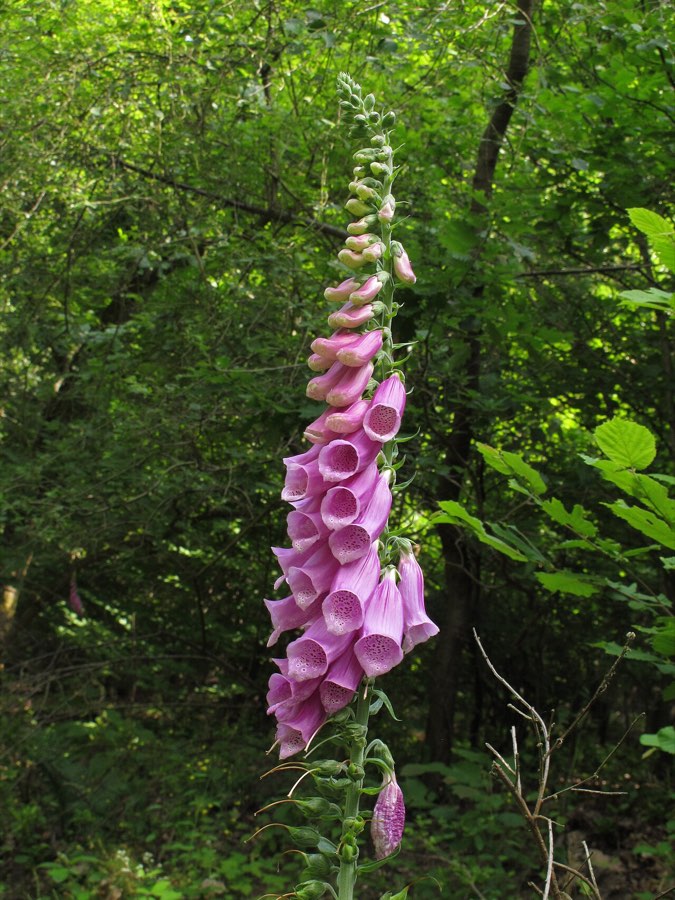
Can be deadly to eat
Never eat a wild plant unless you are 100% certain what it is. Don't touch or eat any plant you don't know, and wash your hands after working in the garden or walking in the woods.
Identify
- Flowers. Tall, one-sided spikes of tubular flowers, 2 to 3 inches long, in purple, pink or white. Spring and summer.
- Leaves. In the first year, a tight rosette of coarse leaves with prominent veins, up to a foot long. In the second year, a tall flower stalk grows from the center.
- Seeds. Round pods that split open to release many tiny brown seeds.
- Origin. Native to western Europe and Morocco; grown in gardens.
Why it's dangerous
- Every part is poisonous, possibly deadly if swallowed. Its heart poisons (cardiac glycosides) can slow the heart or make it beat irregularly.
- Mistaken for herbs. One man picked about 12 young foxglove leaves thinking they were borage. Another person who mistook foxglove for comfrey died of heart rhythm problems.
- Symptoms. Nausea, vomiting, diarrhea, stomach pain, severe headache, a slow or irregular pulse, blurred vision or halos around lights, and collapse.
Lookalikes
- Comfrey and borage. People have mistaken foxglove for both. Don't make food or tea from wild leaves unless you're an expert.
- Mullein. Both start as rosettes of soft, hairy leaves, so don't go by the leaves. Mullein's flowers are yellow; foxglove's are purple, pink or white tubes.
What to do
- Don't make them throw up.
- If you're sure some was swallowed, go to the emergency room now. If you're not sure, call Poison Control. The faster someone gets help, the better the chance of recovery.
POISON CONTROL1-800-222-1222
Free, 24 hours, anywhere in the US. If someone collapses, has a seizure, has trouble breathing or can't be woken up, call 911 now.
SOURCES
Poison Control (poison.org); MedlinePlus; NC State Extension; UMass Extension; Clinical Toxicology (2017). Checked Nov 17, 2026.
Doomkit is a reference, not a substitute for emergency services. In an emergency, call 911.