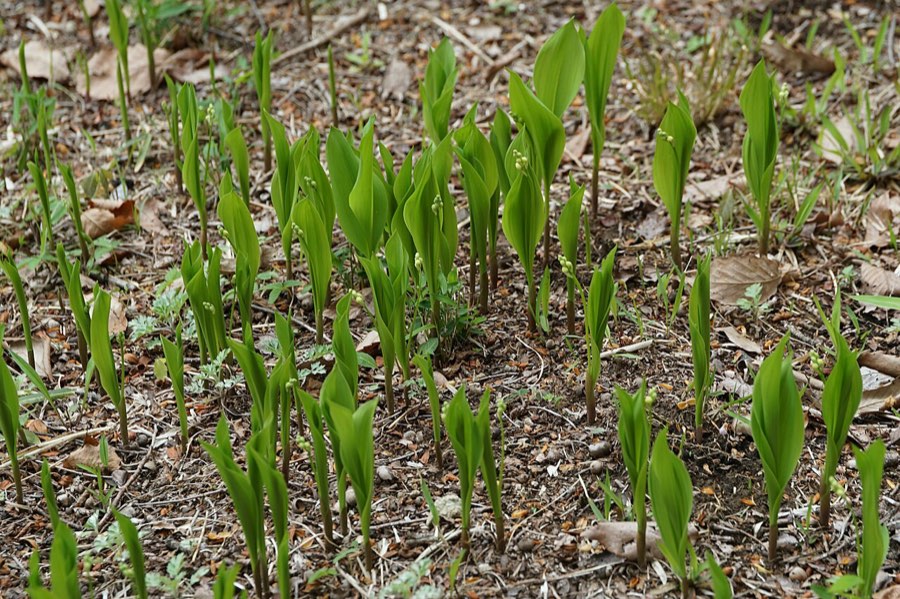
Poisonous to eatIt doesn’t cause a skin rash.
Never eat a wild plant unless you are 100% certain what it is. Don't touch or eat any plant you don't know, and wash your hands after working in the garden or walking in the woods.
Identify
- Leaves. Pairs of broad oval leaves, 5 to 10 inches long, with smooth edges and parallel veins, growing from the base.
- Flowers. 6 to 16 small, nodding, fragrant white bells along one side of a slender stalk, late spring to early summer.
- Berries. Small, round and red.
- Size. Up to about 10 inches tall. It spreads into dense patches.
Why it's dangerous
- Every part is poisonous. It contains heart poisons (cardiac glycosides).
- Symptoms. Slow or irregular pulse, stomach pain, diarrhea, low blood pressure and confusion. Large amounts can cause seizures and coma.
- Even berries. When a toddler ate the berries, Poison Control sent the child to the ER for overnight heart monitoring.
Lookalikes
- Ramps. Lily of the valley and false hellebore grow in the same places as ramps and get mistaken for them. Crushed ramps always smell strongly of onion or garlic. No onion smell means it's not a ramp.
What to do
- Call Poison Control if anyone ate any part. They may send the person to the ER to have their heart watched.
POISON CONTROL1-800-222-1222
Free, 24 hours, anywhere in the US. If someone collapses, has a seizure, has trouble breathing or can't be woken up, call 911 now.
Compare with
SOURCES
Penn State Extension; NC State Extension; Poison Control (poison.org). Checked Nov 17, 2026.
Doomkit is a reference, not a substitute for emergency services. In an emergency, call 911.